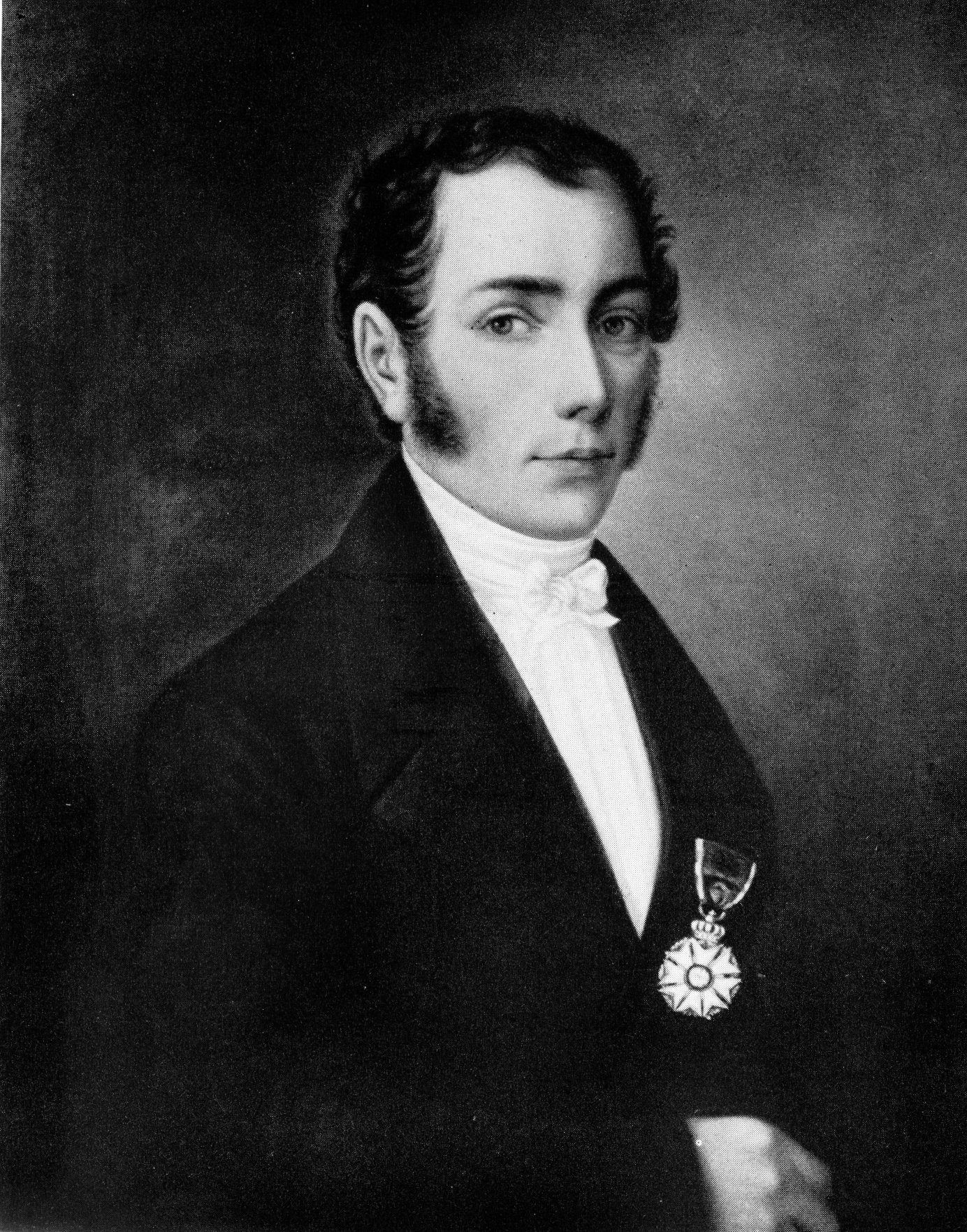
1826: Death of the German physicist and optician Joseph von Fraunhofer. Although self-taught, he revolutionised optics by inventing the spectroscope and mapping more than 570 dark lines in the solar spectrum (Fraunhofer lines). His work made it possible to understand that starlight contains the chemical signature of the elements that compose them. An exceptional master glassmaker, he also designed the most precise achromatic lenses of his time, paving the way for the great telescopes of the 19th century.
1954: Death of the British mathematician and logician Alan Turing. The founding father of theoretical computer science, he conceived the "Turing machine," the universal model for the modern computer. During the Second World War, his work at Bletchley Park to crack the Enigma code was decisive for the Allied victory. A pioneer of artificial intelligence (the Turing Test) and biological morphogenesis, he died prematurely at the age of 41. His immense contribution to science was only fully recognised by the British government in 2009, followed by a posthumous royal pardon in 2013.
Image credits : commons.wikimedia.org