
Welcome to the webpages dedicated to the 200th Anniversary of the Royal Observatory of Belgium.
On the 8th of June 1826, King William I signed the founding charter of the Observatory of Brussels and provided the necessary funds for the construction of the observatory and the acquisition of scientific instruments. The Observatory later became the Royal Observatory of Belgium (ROB) and moved in 1890 to the site where it is now, the plateau in Uccle. Over the past two centuries, ROB has grown into an internationally renowned institute with over 200 employees.
During 2026 and 2027, the Observatory is celebrating its bi-centennial anniversary with a wide range of events and activities. On these webpages you will find information on these, a description of the Observatory and its history and much more.
We keep on adding new material so please make sure to come back!
News
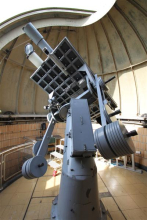
Have you always wanted to learn more about the Sun and its eruptions? Now’s your chance! The Solar Physics and Space Weather Department is opening its doors! From hand-drawn sketches of sunspots to the most detailed images ever taken of the solar corona: you’ll be taken on a journey through 200 years of history.
On 14 April, we are organising guided tours in Dutch and French. Everyone is welcome.
You can find all information to register here.
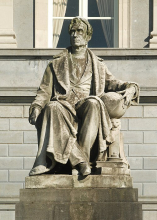
The Palace of Academies is the headquarters of the Académie royale des Sciences, des Lettres et des Beaux-Arts de Belgique (Royal Academy of Sciences, Letters and Fine Arts of Belgium) and its Flemish counterpart, the Koninklijke Vlaamse Academie van België voor Wetenschappen en Kunsten (KVAB).
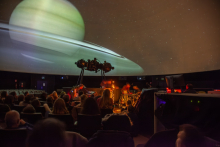
The Royal Observatory of Belgium will celebrate its 200th anniversary with a series of concerts at the Planetarium performed by the Brussels Philharmonic.
Thirty musicians, twelve female voices and one conductor will perform The Planets by Gustav Holst.
Four concerts are planned for January 2027, two on Saturday 23 January and two on Sunday 24 January.
Tickets will be available soon.
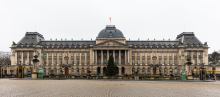
Every summer, the Royal Palace of Brussels opens its doors to the public. On this occasion, Belspo and the Federal Scientific Institutes, including the Royal Observatory of Belgium, present their exhibition ‘Science and Culture at the Royal Palace’.
The summer 2026 exhibition, on the theme of sound and music, will take place from July 3 to August 16 this year.
Admission will cost €10, but is free for children under 13.
More practical information about this exhibition will be published in the coming months.